The Short Answer
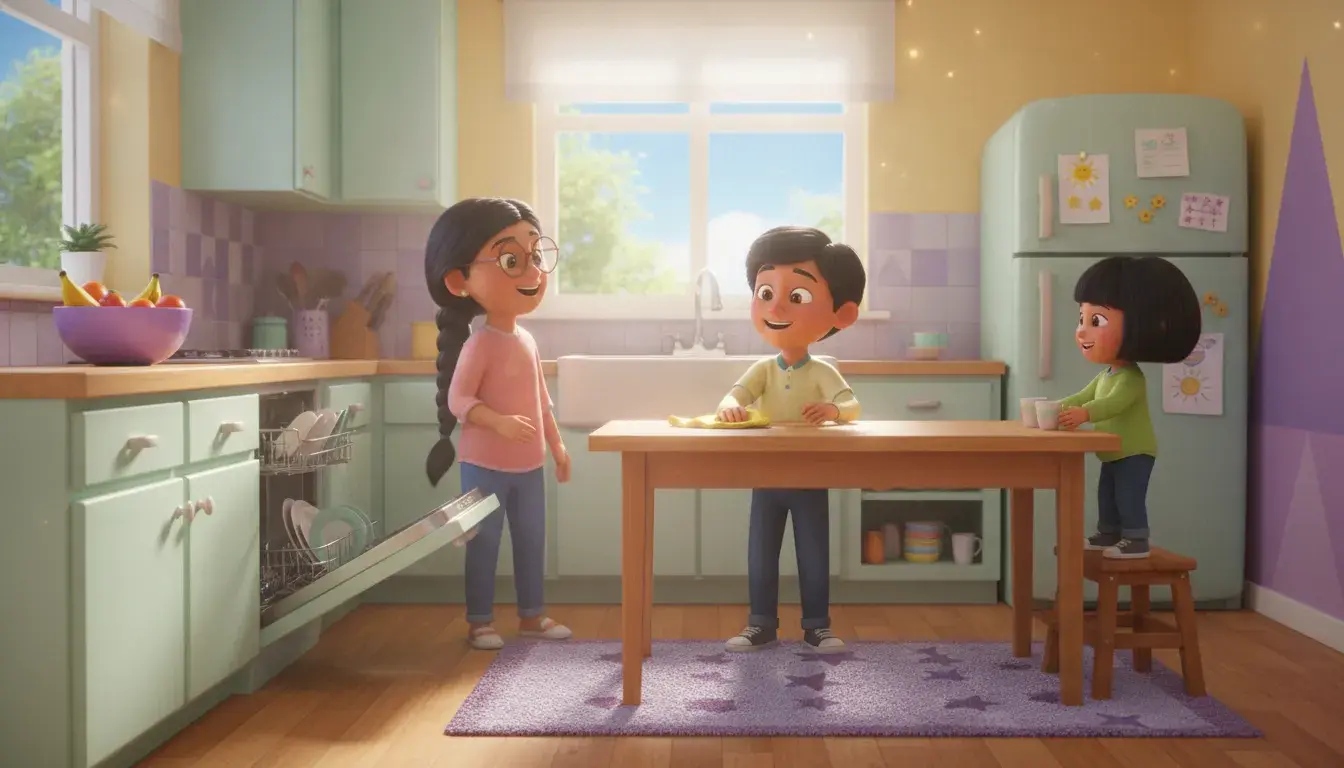
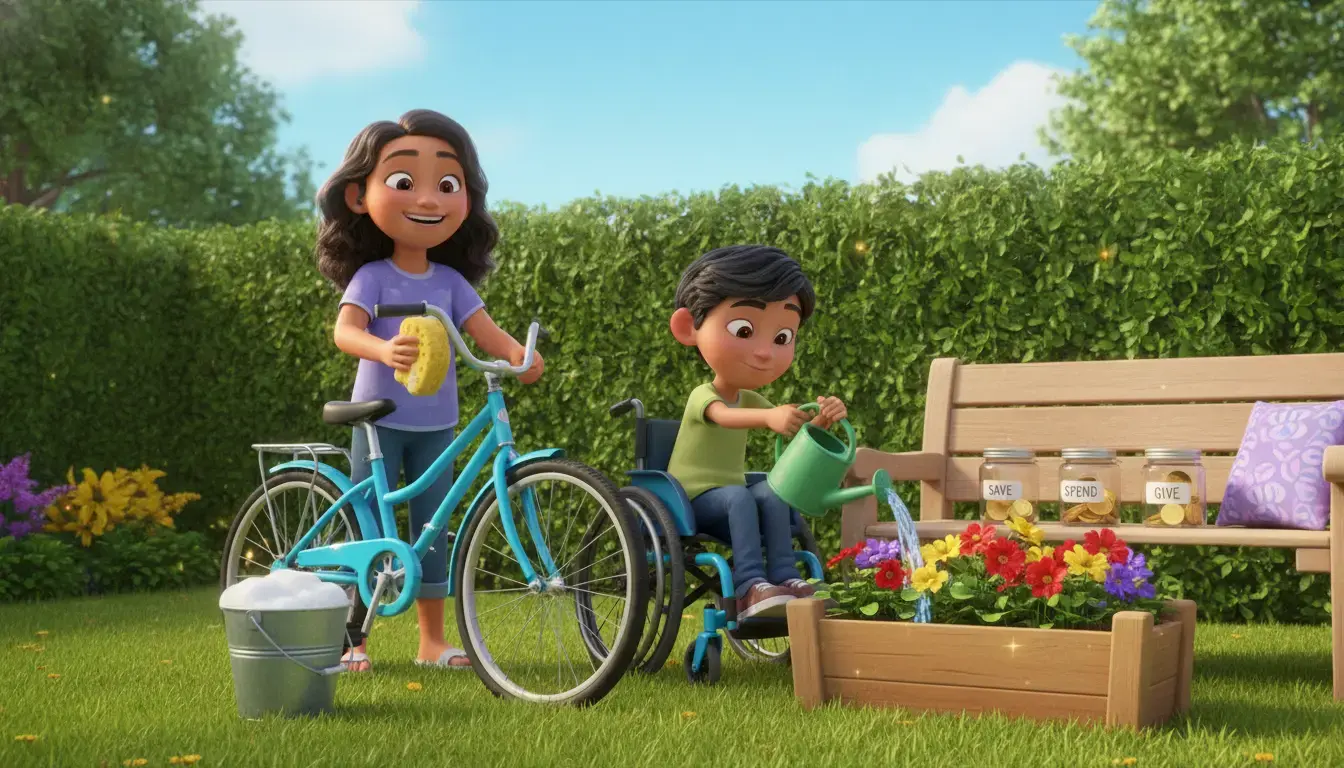
Pay kids for some chores, not all of them. Use two lists. Family jobs are done for free because everyone lives here: making your bed, clearing your plate. Earning jobs are optional extras a kid can take on for pay, like washing the car. The first list teaches pitching in. The second teaches that work earns.
Why Do Parents Disagree About Paying for Chores?
Parents disagree because each side wants to teach something different. Parents who pay want their kids to learn that money comes from work. Parents who don't pay want their kids to help because they're part of the family.
Both goals make sense. Two lists let you teach both. They also settle which jobs are optional, before anyone argues about it.
What Does the Research Say About Paying Kids for Chores?
No study settles it, but the research leans one way: keep everyday helping unpaid, especially for young kids, and give older kids real chances to earn.
- Pediatricians leave room for both. The American Academy of Pediatrics (AAP) says on its 2024 chores page that parents may want to consider tangible rewards like allowances and stickers tied to completed chores. Its 2026 money page says chores may be one way children can earn an allowance. Both say "may," so paying is an option you can choose.
- Paying for helping can shrink helping. In a 2008 study of 20-month-olds at the Max Planck Institute in Germany, Felix Warneken and Michael Tomasello gave some toddlers a small toy for helping an adult. Those toddlers were less likely to help again than toddlers who were praised or got nothing. Very young kids already like to help, and a reward can crowd that out.
- Expected rewards can lower interest. A 1999 review of 128 experiments by Edward Deci, Richard Koestner and Richard Ryan looked at rewards people knew were coming. Those rewards made people less likely to keep doing an activity on their own, and tangible rewards, like money or prizes, tended to hurt more in children than in college students. But the review only counted activities people already enjoyed. In 2001, the same authors reported that rewards didn't lower interest in dull tasks, since there was little interest to lose. Few kids love scrubbing a pan, so read it as a caution about paying for things they'd do anyway, not a verdict on chores. We cover when rewards help and when they backfire in do reward charts work?
- Early helping stood out in one small study. At the University of Minnesota, Marty Rossmann looked back at 84 young adults who had been followed since preschool. Helping at home at 3 or 4 was the best predictor of doing well in their mid-20s. The university's summary of her work adds that children should not be made to do the tasks for an allowance. That advice is the author's, not something the study tested. It's a small sample described in a university summary, so treat it as a hint.
- Practice with real money matters too. Researchers at Brigham Young University and the University of Arizona interviewed 115 young adults, parents and grandparents (Journal of Family Issues, 2019) about how they learned money. Hands-on practice came up as a way people learned to work hard, manage money and spend wisely. The university's summary lists paying kids for tasks beyond their normal chores as one way to give that practice. It's an interview study, so it shows what people remember, not what caused what.
Scholastic's parent guide to allowance lands in the same place. Kids should do regular chores because they're members of the family, and there's nothing wrong with earning extra money for extra tasks beyond those.
Pros and Cons of Paying Kids for Chores
Each setup teaches one lesson and has a weak spot. Keeping family jobs free and paying for extras is the only one that teaches both pitching in and earning.
| Approach | What it teaches | Where it tends to break |
|---|---|---|
| Pay for every chore | Work earns money | "What do I get?" before every job. A kid with enough money can opt out of helping |
| Pay for nothing, no allowance | Everyone pitches in | No practice earning or managing money |
| Allowance, not tied to chores | Managing a steady amount | Chores still need their own reason to happen |
| Allowance docked for missed chores | Missed jobs cost something | Money becomes a punishment tool, and every missed job turns into a negotiation |
| Family jobs free, earning jobs paid | Pitching in and earning, kept apart | Needs a clear line between the two lists |
The last column is our read of where each setup usually goes wrong, not a research finding.
Which Chores Should Be Paid and Which Shouldn't?
A simple test: if the job is about looking after yourself or the space everyone shares, it's a family job. If it's extra, something you'd otherwise do yourself or pay someone else to do, it can be an earning job.
| Age | Family jobs (unpaid) | Earning jobs (optional, paid) |
|---|---|---|
| 3–5 | Toys in the bin, clothes in the hamper, plate to the counter | Usually none yet. A thank-you, time with you, or a sticker can mean more than cash at this age |
| 6–8 | Make the bed, set the table, feed the pet, pack their backpack | Wash the outdoor toys, weed one garden bed, help wash the car |
| 9–12 | Put away their laundry, clear up after dinner, keep their room livable | Wash the car, rake the yard, help clear out the garage |
The split is our suggestion. For which jobs fit which age, see our chores by age list.
How Do You Set Up Family Jobs and Earning Jobs?
Write a short list of free family jobs first, then a small menu of paid extras with prices set ahead, and open the menu only after the family jobs are done.
- Write the family list first. Two or three jobs per kid, sized to their age. Short enough that it actually happens.
- Say why out loud. "We all live here, so we all help." Say it the first time you hand out a family job.
- Build a small earning menu. Three to five optional jobs, each with a price you set ahead of time. Price by the size of the job, not the age of the kid.
- Family jobs come first. The earning menu opens once today's family jobs are done. This stops the kid who skips making their bed to wash the car for pay.
- Pay the same day. Especially under 8. Money on Saturday for Tuesday's weeding is hard for a young child to connect to the work.
- Ask for a redo, don't take pay back. If a job is done badly, ask them to finish it before you pay. Once it's paid, it's theirs. Docking money for unrelated behavior can turn earning into a fight; we explain why in are behavior points bad for kids?
- Don't pay for kindness. Helping a sibling or carrying the groceries in without being asked gets a real thank-you, not a payment. The toddler study above is a good reason to keep those unpaid.
How Do You Handle Paid Chores With Kids of Different Ages?
With kids of different ages, give each one their own earning menu and pay by the size of the job. Otherwise it gets loud: a 9-year-old can do jobs that pay more, and a 5-year-old notices.
- Give each kid their own earning menu. The 5-year-old's menu has small jobs. The 9-year-old's has bigger ones. Nobody picks from the other's list.
- Pay for effort, roughly. Fifteen minutes of real work should earn about the same, whoever does it. The older kid earns more by taking on bigger jobs, not by being older.
- Answer "why does she get more?" with the rule. "You can earn that too. Here are the jobs on your list that pay that much." It works the same when the older one asks why the little one gets paid for something easy.
- Keep family jobs fair in effort, not identical. Both kids clear up after dinner. One loads the dishwasher, the other puts the forks away.
What Can Kids Earn Instead of Money?
Kids can earn time with you, a privilege like picking dinner, screen time, or points toward a goal they chose. For young kids, these may mean more than cash. A 2013 University of Cambridge review for the UK's Money Advice Service notes that young children often see pocket money as a sign of approval or kindness, not as income.
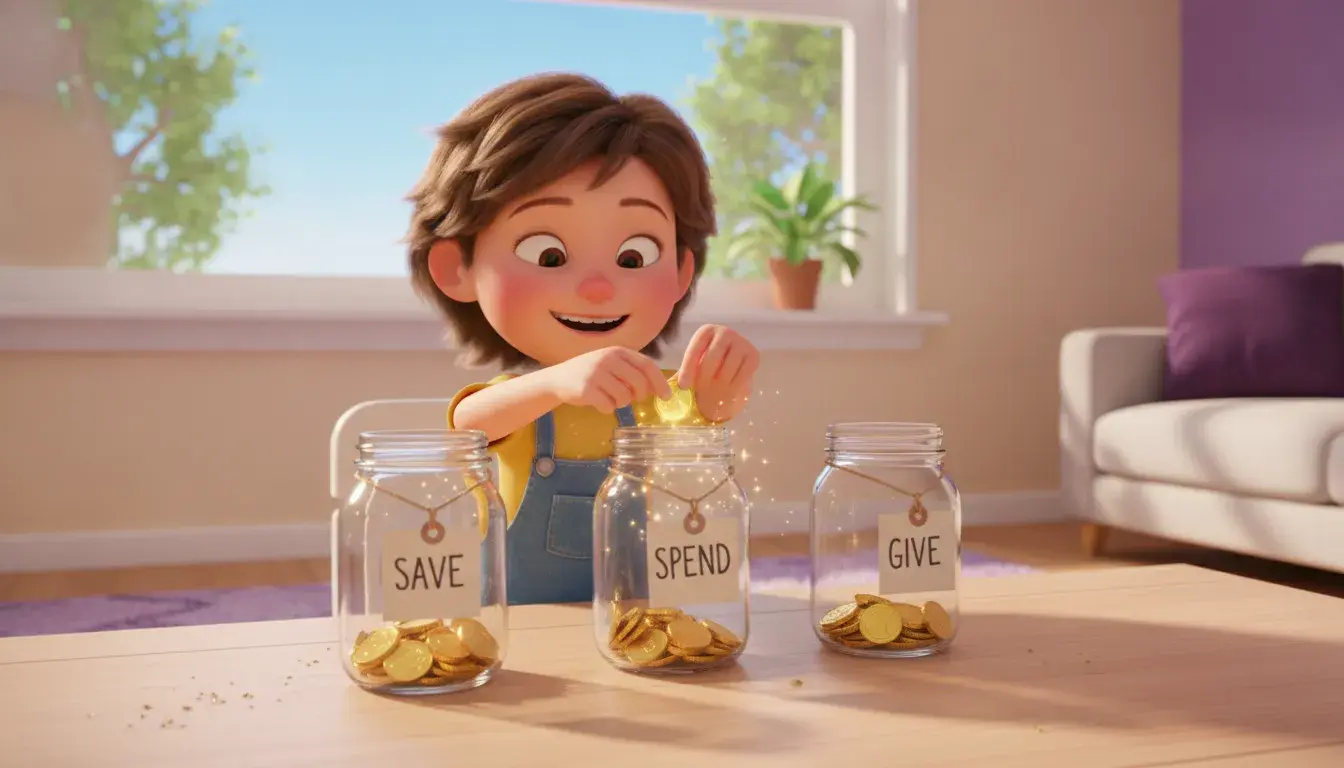
KudoKids (kudokids.org) can hold the earning list. The parent picks which jobs go in the app and what each one pays in Kudo Coins, and family jobs can stay off it. Each child has their own task list and coin values, so a 5-year-old and a 9-year-old earn through different jobs. Kids spend their coins on things the parent sets up, like real-world screen time, or put them toward a savings goal they can watch fill. It's set up for earning. By default, no coins are taken away for a missed task, and the demerit buttons stay off unless you turn them on. If you mark an approved task incomplete, its coins come back out, so approve a job once it's really done. Kudo Coins aren't real money. They're a way to practice earning, waiting and choosing before cash is involved. When you're ready for cash, our guide to teaching kids about money covers allowance by age.
Earning is only half of it. The other half is waiting: how to teach kids delayed gratification.
Frequently Asked Questions
What age should you start paying kids for chores?
Family jobs can start at 3. Cash usually makes sense around 5 or 6, the age Scholastic's allowance guide gives for starting an allowance. A good sign is a child who can count coins and wait a few days for something. Before that, a thank-you or time together can work better than money.
How much should you pay a kid for an extra chore?
There's no research-backed rate. Price by the job. As a starting point, we'd suggest 25 to 50 cents for a 10-minute job and a few dollars for an hour of real work, then adjust to your budget. Set prices before the job, keep them the same week to week, and make sure a kid can reach something they want in a few jobs, not a few months.
What if my kid only wants to do the paid jobs?
That's why family jobs come first. The earning menu opens after today's family jobs are done, so paid jobs can't replace unpaid ones. If a family job gets skipped, handle it like any other missed responsibility, without taking back money they already earned.
What do I say when my kid asks, "What do I get?"
For a family job, answer with the rule: "Nothing extra. We all live here, so we all help." Then point to their earning menu: "If you want to earn, here's what's on your list once this is done." Use the same words every time, so the line between the two lists stays clear.
Is it bad to never pay kids for chores?
No. Keeping every chore unpaid, with a separate allowance or none, is a fine choice. What you'd miss is practice earning and managing money, and you can give that another way, like a small allowance your child manages.
Last updated: November 19, 2026
This article is for informational purposes only and does not constitute professional medical, psychological, educational, or financial advice.