Anika is 9 and has been using KudoKids for about two months. Her routine earns her a steady stack of coins every day, and she has her eye on a legendary aura for her companion — the expensive kind. At her current pace, that’s a long save.
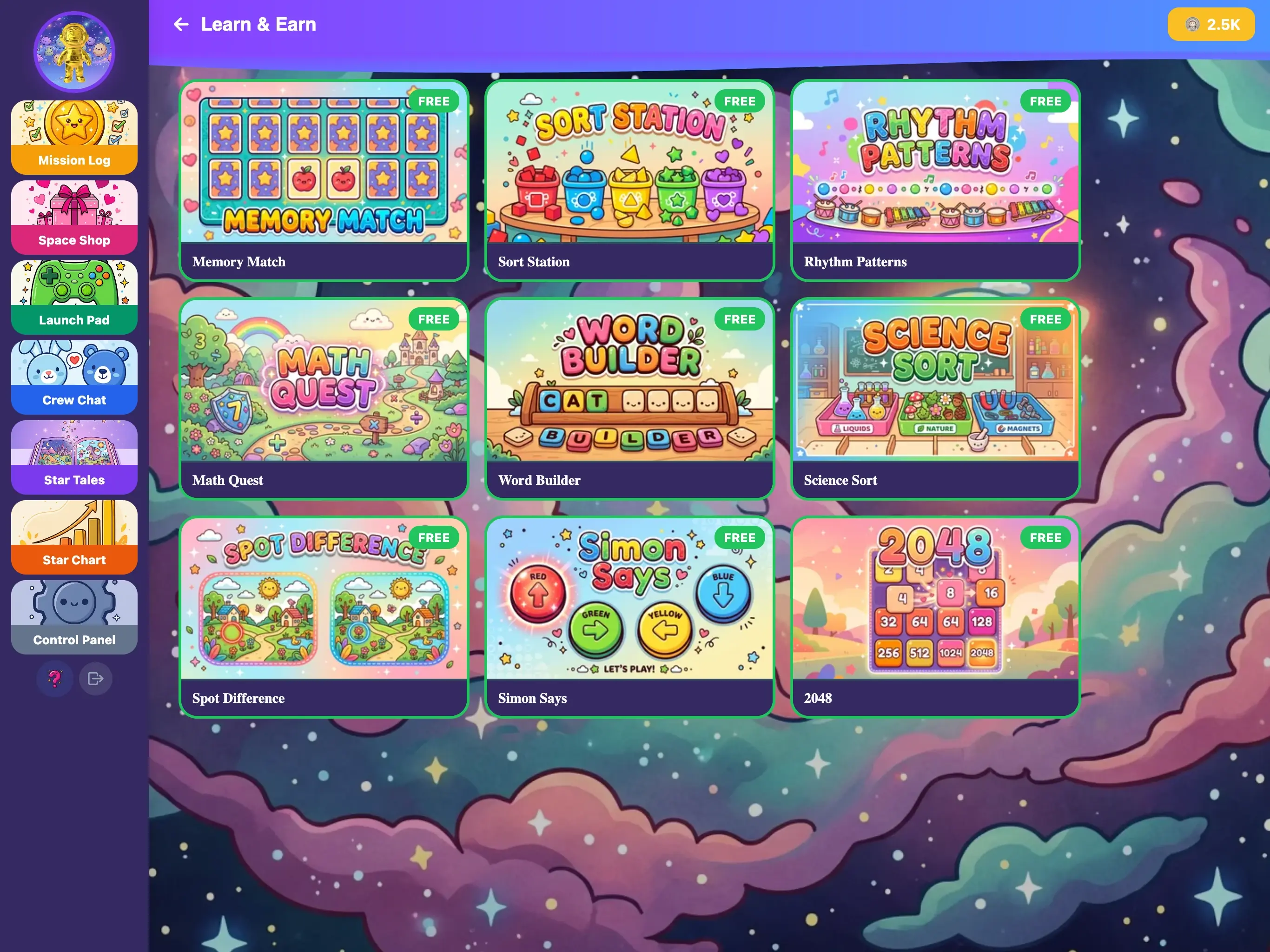
She discovers the educational games earn bonus coins — up to a coin for each game she finishes, up to a daily limit her parents set. She tries Code Blocks because it sounds cool. She drags blocks to make Cosmo walk through a maze. Her first finished maze earns her a coin.
Over the next three weeks, she plays Code Blocks almost every day. Sometimes Math Arena too. The extra coins bring the aura closer — and she can see it happening.
At dinner, she tells her parents about “loops” and “if-then statements.” Her dad — a software engineer — almost drops his fork. She says, “It’s like telling Cosmo: if there’s a wall, turn left. Otherwise, keep going.” She’s nine. She just described conditional logic.
Day 23: she buys the aura. Her parents check the game activity — dozens of Code Blocks rounds and a stack of Math Arena that month. They didn’t assign any of it. The economy incentivized learning, and the games made it fun.