The Short Answer
Kids can start real chores at 3: toys in a bin, clothes in the hamper. By 5 to 7 they can make a bed, set the table and feed a pet. By 8 to 10 they can vacuum and help make dinner. By 11 or 12 they can do their own laundry and cook a simple meal with supervision.
Why Start Chores Young?
Start young because small kids want to help, and the research we have points toward starting early.
- A large U.S. study. A 2019 University of Virginia study (Journal of Developmental & Behavioral Pediatrics) used national data on 9,971 U.S. children followed from kindergarten to third grade. Kids whose parents reported more frequent chores in kindergarten rated themselves higher in third grade on schoolwork, getting along with friends, and being happy with life. Doing any chores at all was linked to better math scores. This shows a link, not proof that chores caused it.
- A small, long-running one. At the University of Minnesota, Marty Rossmann looked at 84 young adults who had been followed since preschool. She found that helping at home at age 3 or 4 was the best predictor of doing well in their mid-20s. Kids who only started at 15 or 16 did worse. It's a small sample, so treat it as a hint, not a rule.
The American Academy of Pediatrics (AAP) says on HealthyChildren.org (2024) that most preschoolers can start pitching in with simple tasks, and that helping keep the home running boosts a child's self-esteem.
Chores by Age: The Summary Table
Kids 3 and 4 need you right beside them, kids 5 to 9 need you nearby or a quick check, and kids 10 to 12 can do most jobs on their own.
| Age | Chores to try | How much help |
|---|---|---|
| 3 | Toys in a bin, clothes in the hamper, books on a low shelf | Do it together |
| 4 | Match socks, put out napkins and forks, water a plant | Right beside them |
| 5 | Make the bed, set and clear the table, fill the pet's bowl | Nearby |
| 6 | Sort laundry, empty small wastebaskets, sweep, wash plastic dishes | Nearby, quick check |
| 7 | Help pack lunch, dust, bring in the mail, pack their backpack | Quick check |
| 8 | Put away their own laundry, make a snack, put away groceries | Occasional check |
| 9 | Vacuum a room, help make dinner, walk the dog with you | Occasional check |
| 10 | Vacuum the house, make a simple side dish, take out trash and recycling | Mostly on their own |
| 11 | Do and fold laundry, change sheets, unload the dishwasher, clean the bathroom | On their own, you inspect |
| 12 | Cook a simple meal (with supervision), wash the car, mow after training | On their own, adult home |
The AAP groups its list as 5–7, 8–10 and 11–12. The year-by-year split in this table is ours. We spread the AAP's lists out so each year adds a little.
What Chores Can a 3 Year Old Do?
A 3-year-old can put toys in a bin and clothes in the hamper. It will take longer than doing it yourself. Right now the goal is the habit; a clean house comes later.
- Put toys in a bin after play
- Put dirty clothes in the hamper
- Put books back on a low shelf
- Wipe a small spill with a cloth
- Carry their own plastic cup to the counter
Show them once, then do it together. Pictures beat words at this age.
What Chores Can a 4 Year Old Do?
A 4-year-old can match socks, put out forks and water a plant. They can also follow two short steps in a row: "First the blocks in the bin. Then the bears on the bed."
- Match clean socks
- Put napkins and forks on the table
- Water a plant with a small can
- Put groceries on a low pantry shelf
- Pull the covers up on their bed
What Chores Can a 5 Year Old Do?
A 5-year-old can make their bed, set and clear the table, put toys away, and fill the pet's bowl, with you nearby. This is where the AAP's list starts.
- Make their bed (lumpy counts)
- Set and clear the table
- Put toys away and neaten a bookshelf
- Fill the pet's food bowl
- Water flowers
What Chores Can a 6 Year Old Do?
A 6-year-old can sort laundry, empty small wastebaskets and sweep. They can also hold a short routine in their head, like "bed, teeth, backpack by the door."
- Sort laundry into lights and darks
- Empty small wastebaskets into the big bin
- Sweep with a small broom
- Wash plastic dishes in the sink
- Pull weeds or rake leaves
What Chores Can a 7 Year Old Do?
A 7-year-old can dust, bring in the mail and help pack their own lunch. At this age a kid can start taking over a job instead of helping with it.
- Help make and pack their school lunch
- Dust shelves and tables
- Bring in the mail
- Pack their backpack the night before
- Fold towels and washcloths
What Chores Can an 8 Year Old Do?
An 8-year-old can put away their own laundry, make a snack and put away groceries. Most jobs just need you to check.
- Put away their own clean laundry
- Make their own snack
- Put away groceries
- Clear and load the dishwasher (you handle sharp knives)
- Wipe the bathroom sink
What Chores Can a 9 Year Old Do?
A 9-year-old can vacuum a room, help make dinner and take out the recycling. Stay in the kitchen for anything with heat or a knife.
- Vacuum a room
- Help make dinner: wash vegetables, measure, stir
- Walk the dog with you
- Take the recycling out
- Fold and put away their own laundry
What Chores Can a 10 Year Old Do?
A 10-year-old can vacuum the main rooms, make a simple side dish and take out the trash. They can own a whole job from start to finish.
- Vacuum the main living areas
- Make one simple part of dinner, like a salad
- Take out the trash and recycling on pickup night
- Start learning the washing machine with you
- Clean up the kitchen table and counters after meals
What Chores Can an 11 Year Old Do?
An 11-year-old can do their own laundry, change their sheets and clean the bathroom. The AAP's list for 11 and 12 is a real step up.
- Do and fold their own laundry
- Change their bedsheets
- Unload the dishwasher
- Scrub the toilet and clean the bathroom
- Help clean the kitchen after dinner
What Chores Can a 12 Year Old Do?
A 12-year-old can cook a simple meal with supervision, wash the car, and mow the lawn after training. There are a few safety lines.
- Cook a simple meal with supervision
- Watch a younger sibling, with an adult home (the AAP's condition)
- Wash the car
- Plan one family dinner and write the grocery list
- Mow the lawn with a walk-behind mower, after training: the AAP says 12 is the minimum age for a walk-behind mower and 16 for a riding mower
How Do You Run Chores for Two Kids of Different Ages?
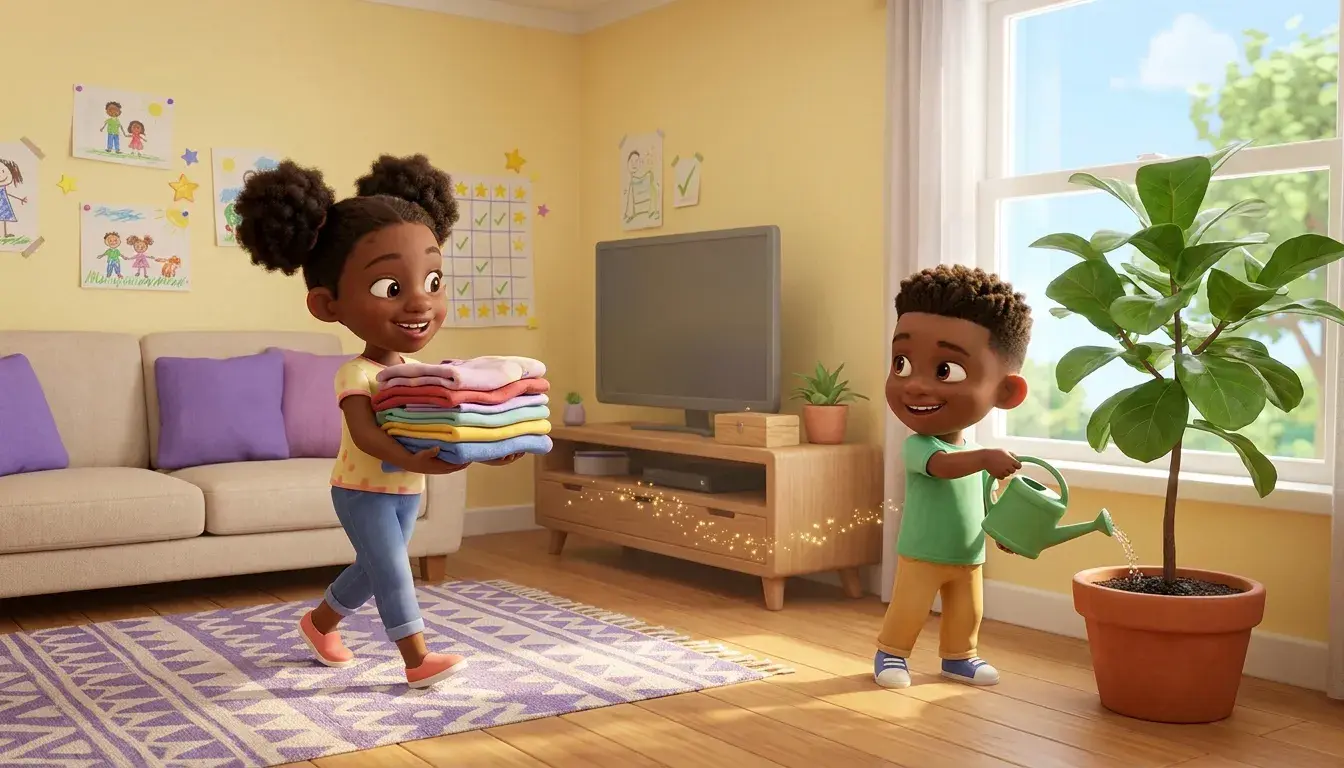
Two kids of different ages each need their own list, sized to them. One shared chart hands a 9-year-old and a 5-year-old the same rules: too easy for one, too hard for the other, and both notice.
- Give each kid their own list. Post them separately so nobody compares line by line.
- Split a shared job by ability. At dinner cleanup, the 9-year-old loads the dishwasher and the 5-year-old puts the forks away. Same job, different part.
- Make it fair by effort. Each job should be about as hard for that kid. One job may take five minutes and the other fifteen.
- If chores earn something, price by the size of the job. Each kid earns from their own list, and the 9-year-old earns more by taking on bigger jobs, not by being older. We set out the full pay rules in whether to pay kids for chores.
- Let the older kid step up, carefully. Leading a team job is great. Watching a younger sibling can wait until 11 or 12, with an adult home.
The same idea works for rules beyond chores. We cover it in different rules for siblings of different ages.
In KudoKids (kudokids.org), every child has their own task list, and you set the Kudo Coin value of each task per child. That way, a 5-year-old and a 9-year-old use the same system at different levels. Audio narration reads instructions aloud, so a 4-year-old who can't read yet can follow a routine next to a sibling who can. It's set up for earning. Nothing is docked automatically, and the demerit buttons stay off unless you turn them on.
How Do You Get Kids to Do Chores Without a Fight?
Start small, keep the same time each day, make the list visible, and praise the effort. Most of this list comes from the AAP's advice; the examples are ours:
- Start with one job. With a school-age child new to chores, add one task at a time; a long list overwhelms.
- Same time every day. Tie the job to a moment that already happens: shoes on the mat when you come in, plate to the counter after dinner.
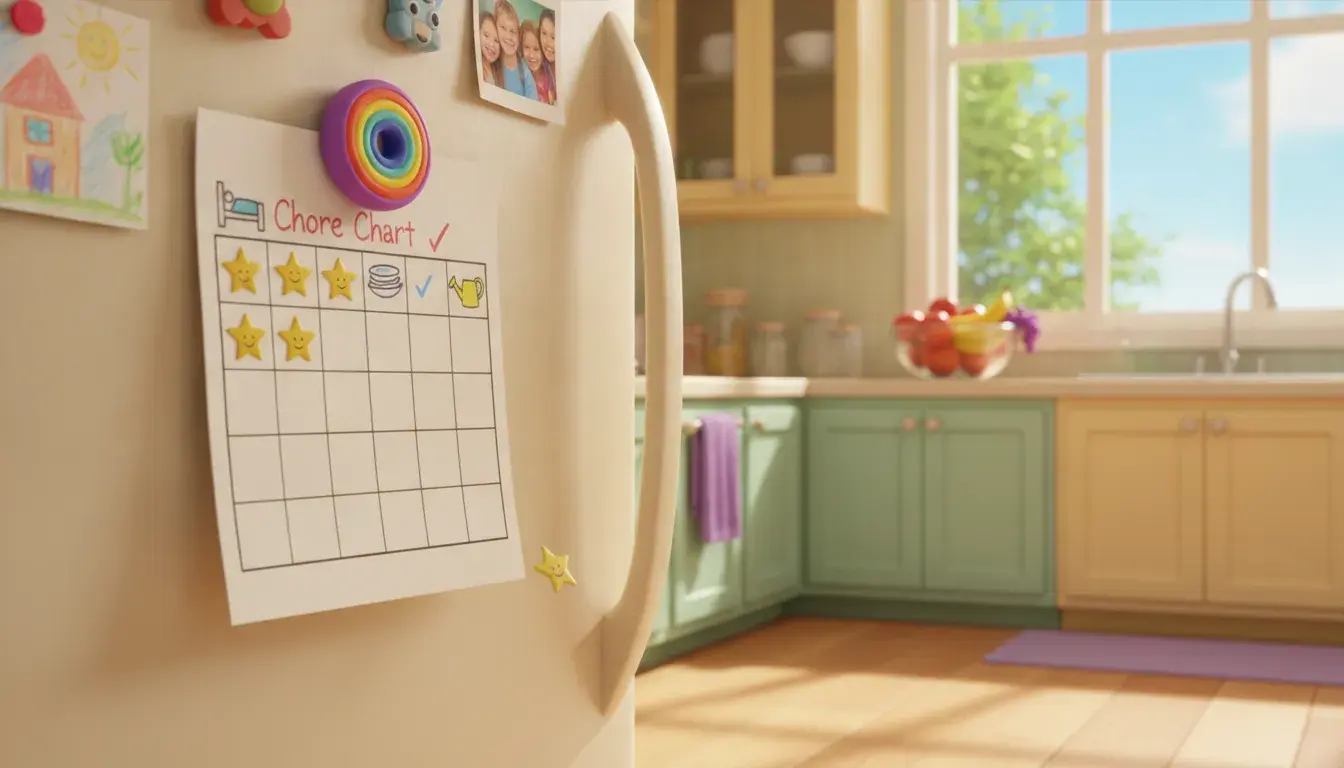
- Make the list visible. A chart or checklist the child can see. Use pictures for kids who can't read yet.
- Praise the effort, not the outcome. Don't redo their work in front of them.
- Skip the lecture. The AAP notes that badgering or scolding doesn't work, and rewarding success works much better.
If you've tried a sticker chart and watched it die after a week, the chart itself may not be the problem. We wrote about why chore charts stop working and what keeps them going.
Chores go more smoothly inside a steady start to the day. Here's a before-school morning routine with one chart per kid.
Frequently Asked Questions
Can a 2-year-old do chores?
Yes, in tiny pieces and always with you. A 2-year-old can drop a toy in a bin, carry a diaper to the trash, or hand you socks from the dryer. Make it a game, do it together, and stop while it's still fun. The lists above start at 3, the preschool years, when the AAP says most kids can start pitching in with simple tasks.
At what age should a child start doing chores?
Around 3. The AAP says most preschoolers can start pitching in with simple tasks, and the University of Minnesota work above found that starting at 3 or 4 mattered more than starting later.
Should kids get paid for chores?
Experts disagree. The AAP says parents may want to consider rewards like allowances or stickers tied to chores. The University of Minnesota's summary of Rossmann's work says kids shouldn't be made to do chores for an allowance. One middle path is family jobs everyone does for free, plus extra jobs a kid can earn from, priced by the size of the job rather than the age of the kid.
How many chores should a child have each day?
Start with one daily job and add another once the first happens without reminders. Under 6, one or two short jobs a day is plenty. Older kids can handle a few daily jobs plus one bigger weekly one.
What if my child refuses?
Expect some pushback. Keep the job small, keep the time the same, and if there's a reward, give it right after the job is done. If the same job sparks a fight every day, it may be too big for now, so make it smaller and build back up. If you'd rather not be the one reminding, see how a chore app with a list for each kid works.
What if they do the chore badly?
Show them the one part that needs fixing and ask them to finish it. Don't take over, and don't redo it while they watch. A lumpy bed a 5-year-old made is a made bed.
Last updated: September 24, 2026
This article is for informational purposes only and does not constitute professional medical, psychological, or educational advice.