The Short Answer
Good reward systems for kids at home: a sticker chart for ages 3 to 6, a coin jar, points with a reward menu, earned screen time, or a privilege ladder for kids 8 and up. Whichever you pick, give each kid their own balance, pay right after the job, and add a bigger saving goal once small prizes get old.
Reward System Ideas at a Glance
The ten reward systems below cover ages 3 to 12, from sticker charts to privilege ladders. Each has one common weak spot, and each weak spot has a fix.
| Idea | Best ages | What breaks it | The fix |
|---|---|---|---|
| Sticker chart | 3–6 | Someone has to remember the stickers; the older kid finds it babyish | One chart per kid; the kid adds the sticker, you check it |
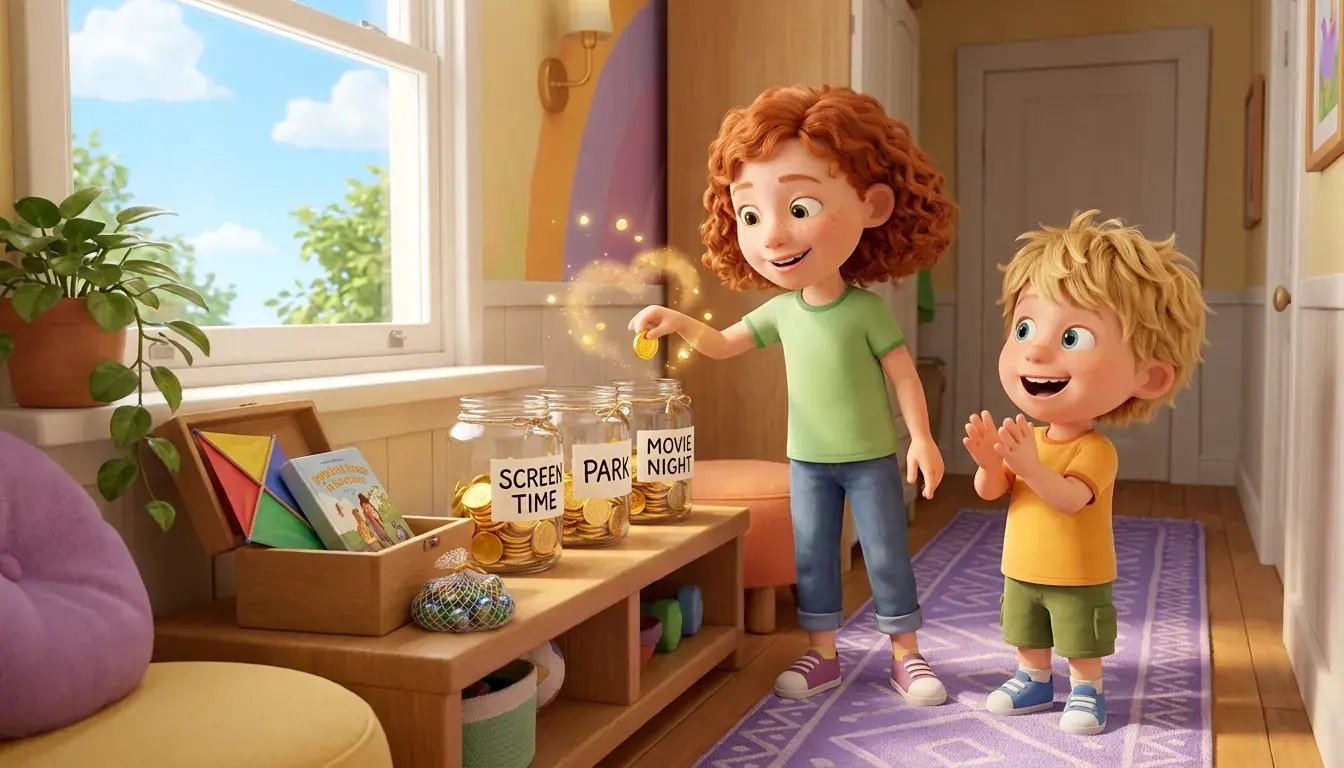
| Marble or coin jar | 3–8 | One shared jar, so one kid does the work and both get the prize | One jar per kid; save a shared jar for team goals |
| Points and a reward menu | 6–12 | The same menu for months; points taken away in a fight | Refresh the menu monthly; set what jobs are worth per kid; a missed job just doesn't earn |
| Prize box | 3–7 | It empties, it gets expensive, and the same prizes stop exciting anyone | Mix in privileges and time with you, not just toys |
| Experience coupons (bake with Dad, pick dinner) | All ages | Cashed in, then forgotten by a busy parent | Put it on the calendar the day it's cashed in |
| Earned screen time | 5–12 | One shared device; minutes taken away as punishment | Each kid earns their own balance; you set a daily cap |
| Chore money | 7–12 | No cash on hand; kids opt out once they have "enough" | Unpaid family jobs for everyone, plus optional jobs that earn |
| When-then ("When your backpack's hung up, then the tablet") | All ages | Nothing to see, so it only works on days you have the energy | Pair it with a check-off the kid can see |
| Family goal jar (pizza night when it's full) | 5–12 | One kid carries the others | Show each kid's share; keep team goals small and short |
| Privilege ladder (a later bedtime at 9, a bigger job at 10) | 8–12 | The younger sibling wants the next step now | Tie each step to an age and write it down |
Reward System Ideas for Two Kids of Different Ages
For two kids of different ages, give each one their own balance and their own job values. One shared chart or jar means the kid who does more carries the kid who does less, and both get the same prize for very different jobs. That's when "not fair" starts.
- One balance per kid. Each child's stickers, marbles or coins are theirs. Nobody can take credit for a sibling's work, and nobody can lose it for them.
- Set what each job is worth per kid. A 5-year-old's "shoes on the mat" and a 9-year-old's "unload the dishwasher" should both pay, and not the same amount.
- Put something for each age on the menu. A menu full of stickers loses the 9-year-old. A menu full of big-ticket items loses the 5-year-old, who can't wait that long.
Different jobs and job values for each kid are fair as long as you explain why. We go deeper on that in how to keep rules fair for siblings of different ages.
Which Reward Systems Don't Depend on You Remembering?
The systems that don't depend on your memory let the kid mark the job done and tie each job to a moment that already happens. A paper system can't remind anyone. Someone has to check the job, find the stickers, count on Friday and hand over the prize. If that's always you, the system stops on your busiest week.
On a busy day, the reward often comes late. The CDC's guide for parents of toddlers and preschoolers says why that matters: "Rewards that happen right after a behavior are best" (CDC, 2026). When the reward depends on you remembering at 8 p.m., it comes late or not at all, and the system starts to feel optional.
- Let the kid mark the job done. Your part is a quick look and a yes.
- Tie each job to a moment that already happens. "Right after breakfast, plate on the counter." The moment does the reminding.
- Start with a couple of jobs per kid. The CDC suggests picking a couple of specific behaviors to start, not a whole list.
- Pay out the same way every time, so there's nothing to decide on a tired night.
How Do You Keep a Reward System Going Past Month Three?
To keep a reward system going past month three, refresh the rewards with your kids and add a bigger saving goal. The CDC says kids tire of rewards: "Children also become tired of some rewards and develop new likes and interests. Keep a running list of rewards your child would like. Change and add to the reward list over time to continue to make the rewards fun and exciting."
- Refresh the menu once a month, with the kids. Ask what they'd work for now. Drop what nobody has picked in weeks.
- Add a saving goal. Something that takes a week or more, with a way to see how close they are. It gives kids something new to aim for when the small prizes get old.
- Shift toward privileges and time with you. Picking dinner, a later lights-out, a bike ride with a parent. They don't run out and they don't cost much.
- Pay for chores, not for fun. A 1999 review of 128 experiments by Deci, Koestner and Ryan found that promised prizes lowered interest in things people already enjoyed, and more so in children than in college students. In a 2001 follow-up, the same team found prizes didn't lower interest in dull tasks. There was little interest to lose.
So reward the chores nobody loves, and leave alone what your kid already does for fun. For more on when rewards help and when they backfire, see do reward charts work?
How Do You Create a Reward System That Lasts?
To create a reward system that lasts, start with a few jobs per kid, set what each job is worth per kid, pay the same day, and review it once a month.
- Pick one to three jobs per kid. Specific ones: "bed made," not "be responsible."
- Decide what each job is worth, per kid. Bigger jobs pay more.
- Build the reward menu with your kids. Small rewards for today, medium ones for this week, and one big saving goal.
- Pay right after the job. Same day at the latest.
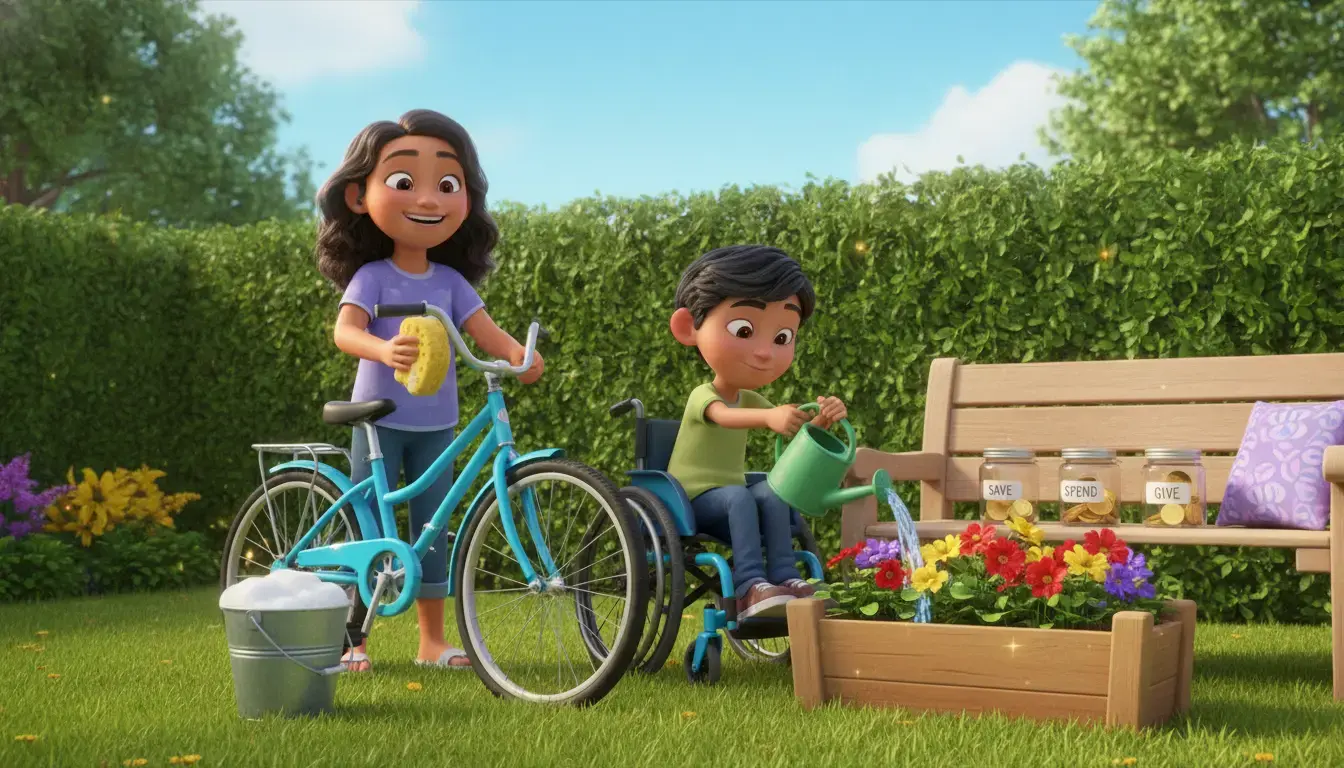
- Let them choose to spend or save. Deciding for themselves is part of the point.
- Don't take earned rewards away. A missed job simply doesn't earn. Taking back what a kid already earned turns the system into a fight about the chart.
- Review it once a month. Swap tired rewards, and move jobs that have become habits onto the "family jobs everyone does" list.
Here's a starting menu by age:
| Ages | Small (same day) | Medium (this week) | Big (a saving goal) |
|---|---|---|---|
| 3–5 | Pick the bedtime story, an extra song at bath time | A trip to the park, baking together | A small toy they chose |
| 6–8 | Pick dinner, a short block of screen time | Choose the family movie, a friend over | An art set or a game |
| 9–12 | A later lights-out, a bigger block of screen time | Choose the weekend outing | Something they've saved for over several weeks |
How Many Points Should a Reward Cost?
Price each reward by how long it takes to earn: a small one should take about a day of jobs, and a big saving goal two weeks or more.
| Reward size | Should take about | Example (if one job pays 5 points) |
|---|---|---|
| Small | A day of jobs | 10–15 points |
| Medium | A few days to a week | 40–60 points |
| Big (saving goal) | Two weeks or more | 150+ points |
For a 3- to 5-year-old, keep most prices in the small column and make the big goal only a few days away. If nothing is ever affordable, cut the prices. If everything is, raise them or add a bigger goal.
How Does KudoKids Handle This?
When we designed KudoKids (kudokids.org), we built it around the three weak spots above: two kids, a parent's memory, and month three. Each kid has their own tasks, routines and coin values, so two kids of different ages can run the same system at different levels. Kids mark jobs done, and parents can require a quick approval, so the remembering doesn't all land on you. A mis-marked job gets a "Try again" path instead of a penalty. If a parent marks an already-approved job incomplete, that job's coins are taken back. KudoKids is set up for earning: by default, no coins are taken away for a missed task, and the demerit buttons are off unless you turn them on.
For month three, kids pick a saving goal and watch a progress bar fill on their Home screen. Coins can also buy real-world device time, priced by the minute once for the whole family, and unused minutes stay banked (more on how kids can earn screen time). If a paper chart already quit on you, here's what a sticker chart set per kid looks like.
Frequently Asked Questions
What is a good reward system for a 5-year-old?
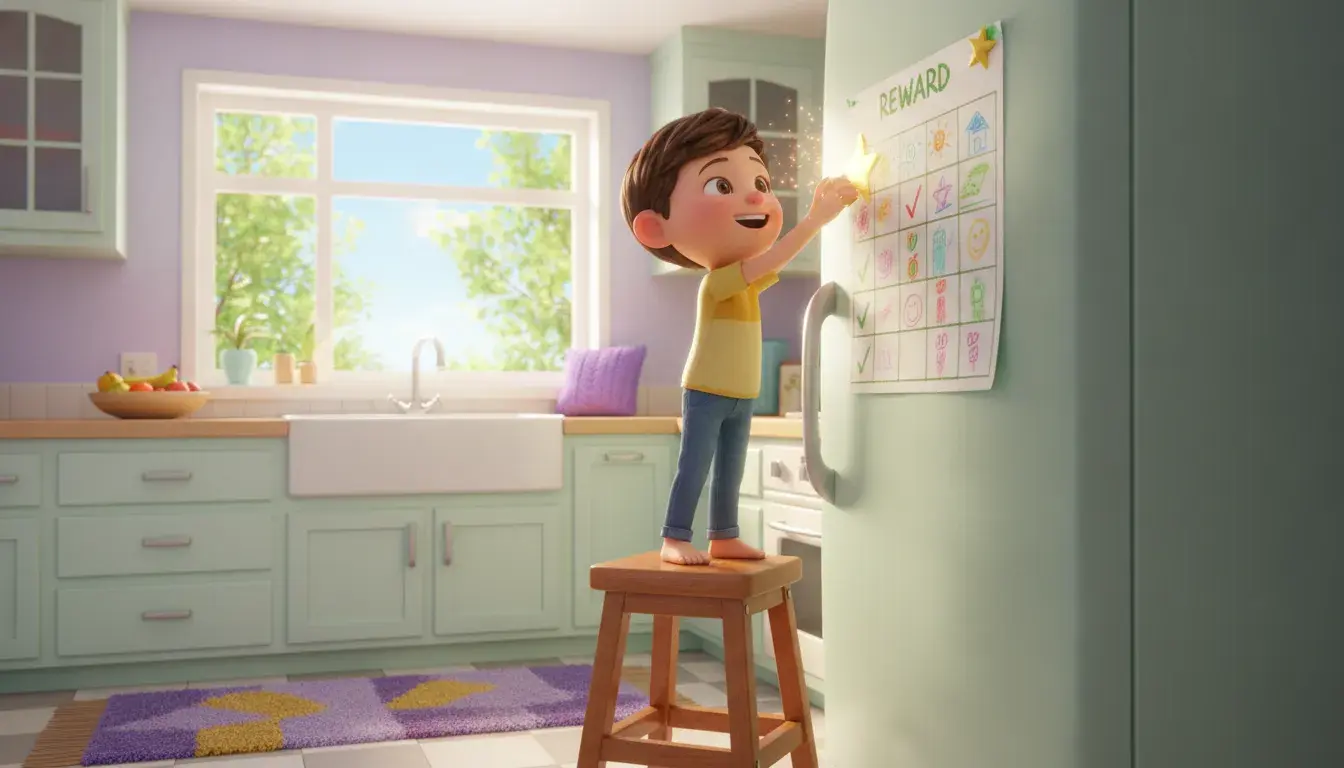
Simple and fast. One or two jobs, a sticker or coin right after each one, and a small reward the same day. The CDC suggests a chart made "with pictures and simple words," so a child who can't read yet still knows what to do.
Should rewards be toys or experiences?
A mix, leaning toward experiences as kids get older. The CDC's list of rewards for young children includes affection, praise, and extra time or a special activity with you, not only things. It also says kids get tired of some rewards, so change the list over time.
Is a reward system just bribery?
A reward system isn't bribery when the deal is set ahead of time. A bribe is offered in the middle of a standoff to end it; a reward is agreed on in advance and earned. Understood.org (2019) describes a reward as "something your child earns for correctly doing what you asked." We compare the two side by side in do reward charts work?
How long should a reward system last?
As long as it keeps working, with a refresh every month. Once a job becomes a habit, move it to the unpaid "family jobs" list and put a new, bigger job on the earning list.
Last updated: October 29, 2026
This article is for informational purposes only and does not constitute professional medical, psychological, or educational advice.