Why Sticker Charts Stop Working After About Nine Days
You bought the stickers. You drew the chore chart. It worked for a week, and then it was wallpaper — and it was never going to fit both kids anyway, because the nine-year-old thought it was babyish and the six-year-old felt behind. A sticker chart ends at the sticker. KudoKids turns the same finished chore into Kudo Coins your kid spends on games, rewards, and screen time you price.
Worth saying up front: KudoKids is an app, not a printable. If you came looking for a free PDF for the fridge, that is the thing that already stopped working.
Why Sticker Charts Fail
It is not that you ran it wrong. A chart runs on novelty and asks every kid to want the same thing — and neither one holds.
- The novelty is gone by the second week
- One chart, two kids — the older one calls it babyish, the younger one feels behind
- A star buys nothing, so the effort doesn't lead anywhere
- You are still the one reminding, checking, and refereeing
- The chart cannot change as a kid grows
- A good week and a bad week look the same by Sunday

A Sticker Is the End of the Trail. A Coin Is the Start of One.
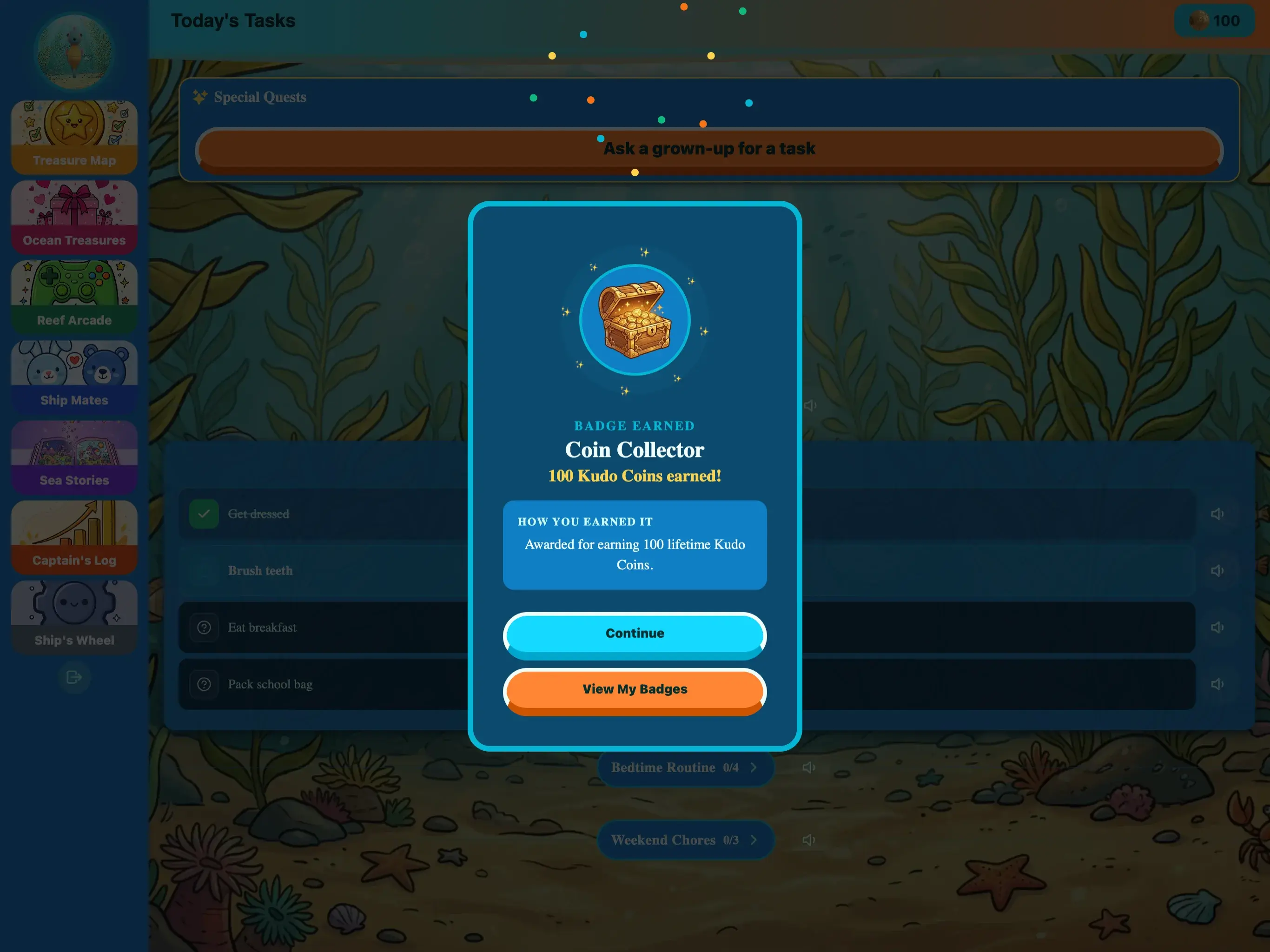
A star gets stuck on a chart and that is where it stops. A Kudo Coin gets spent — on tablet or TV minutes you priced, on a game, on a reward you added yourself, or into savings for something bigger. The kid decides what it was worth doing for, and you decide what it can buy.
And because the chores, the rates, and the rewards are set kid by kid, the same system can be worth showing up for at six and at nine.
The Research Behind It
Sticker charts run on novelty. KudoKids runs on an earn-and-spend loop — research-informed reward design and habit formation, shaped by working with child-development experts.
Learn about our approach →What Replaces the Chart
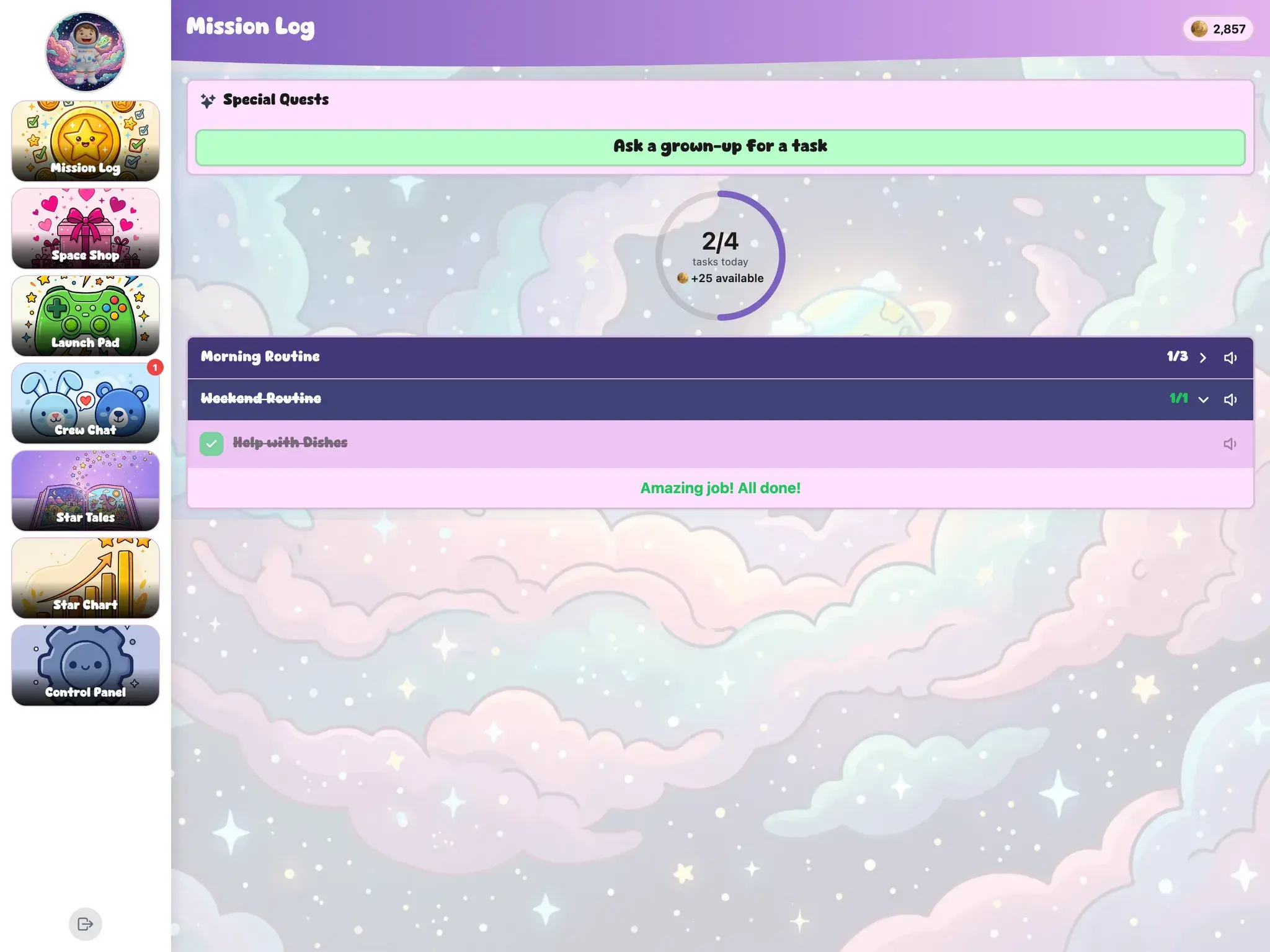
One app where the chore list is set per kid and the payoff is a coin they spend, not a star they collect.
- Chores and routines set per kid, so each one gets their own list
- Kudo Coins they actually spend — the effort goes somewhere
- Screen time priced by the minute, at your rate
- Rewards you add yourself, and you choose which tasks and rewards need your OK first
- What's on the list shifts by age — 3-4, 5-8, 9-12
- Approvals and visibility from the parent dashboard, so you stop keeping score by hand
Sticker Chart vs. KudoKids
Sticker Chart
- Novelty gone by week two
- A star buys nothing
- One chart for every kid in the house
- You keep score by hand
- Same list at six and at nine
- Nothing to save toward
KudoKids
- Built to hold up past the novelty
- Coins they earn and spend
- Chores and rates set kid by kid
- Approvals from your dashboard
- Shifts by age — 3-4, 5-8, 9-12
- Screen time and rewards worth saving for
Why Families Choose KudoKids
“As a Licensed Clinical Mental Health Therapist and a Kudo Kids partner, I have had the opportunity to test this app and have been genuinely impressed by its thoughtful approach to supporting children's healthy development through technology. Rather than simply providing screen time, the app encourages meaningful interaction between parents and their children while gradually fostering independence and responsibility. One of the features I appreciate most is the level of parental control and involvement. This creates a safe digital environment and helps them explore technology with appropriate guidance and boundaries. My favorite aspect of the app is its focus on building self-esteem. The research-informed games and activities are designed to encourage confidence, perseverance, and resilience in a positive and engaging way. These experiences help children develop important life skills while having fun. Overall, I believe this app is an excellent tool for families looking to introduce technology in a healthy, developmentally appropriate way.”

Bryce Klein, M. Ed., LPC, NCC
Licensed Clinical Mental Health Therapist
A clinical partner with a signed agreement who recommends KudoKids to the families they work with. Unpaid — no commission.
“I have watched KudoKids grow almost since the inception. I can see how beneficial it could be for families in teaching their children several life skills. From emotional regulation, to financial literacy, and even digital wellness this app can start kids on the path to success. This app is still a tool, but it is one that can easily be added to a parent's toolbox.”

Jana Rodriguez, MA, LPC
Ember Counseling
A clinical partner with a signed agreement who recommends KudoKids to the families they work with. Unpaid — no commission.
“I truly appreciate what you’ve created here. In a world where children are naturally drawn to devices, this app offers something parents can feel good about—safe, supportive, and intentional. It gives children a space to play, explore, and grow emotionally, while being protected from intrusive ads and influences that simply don’t belong in a child’s world. I especially value the inclusion of affirmations and emotional support—it’s not just screen time, it’s meaningful time. This is a thoughtful solution that meets families where they are, and I’m really glad it exists.”

Claudia Rickard
Emotional Intelligence Development Specialist and creator of The Bunny Talk Process™
This is a paid partner — KudoKids compensates them (commission and/or a sales role) when families they refer sign up. We show this on every paid endorsement so you can weigh it for yourself.


Ready to Take the Chart Off the Fridge?
Set each kid's chores, price the rewards, and let them earn. Free to start, no credit card required.