Quick Answer
Family engagement ideas that reach working families go to the family: morning sessions at drop-off, recorded workshops, short texts, home visits, take-home kits, and at-home programs parents run themselves. In a 2019 federal survey, 66% of students below the poverty line had a parent or other household member attend a school or class event, against 82% at or above it.
TL;DR
Federal survey data show a gap in who makes it to school events, and the law behind the money already names the usual fixes. That law is Title I's parent and family engagement section (schools sometimes write it Title 1): Section 1116 of the Elementary and Secondary Education Act. It requires one annual Title I meeting, then a flexible number of other meetings, and it names morning or evening times, transportation, child care and home visits. The engagement formats that reach non-attending families share one property: they don't ask the family to come to the building. This article is written by a vendor whose product is one of those formats; the ideas below stand on their own, and every determination about your school's plan belongs to your coordinator, not to us.
Why Do Parent Nights Keep Missing the Families They're Meant For?
Parent nights miss families whose work hours, transportation, child care or past experience of school keep them away. In the U.S. Department of Education's 2019 Parent and Family Involvement survey, 66% of students below the poverty line had a parent or other household member attend a school or class event that year, compared with 82% of students at or above it. Look at an evening event from the family's side. A parent working a closing shift can't attend anything at 6pm. A parent with a second job may not know their schedule two weeks out. A parent without a car needs transportation, a parent with a toddler needs child care, and a parent who had a bad experience of school themselves needs a reason to walk back into one. Each barrier removes some of the families the event was funded to reach.
The same survey found a wider gap in volunteering: 28% of students below the poverty line had a parent who volunteered or served on a school committee, against 46% of students at or above it.
Keep your events. Just don't make them the only format the plan pays for.
Does Family Engagement Have to Mean Events?
Family engagement doesn't have to mean only events, though the statute does require some: each Title I school convenes an annual Title I meeting, at a convenient time, and offers a flexible number of meetings beyond it. Past that, Section 1116 of the Elementary and Secondary Education Act is flexible. Schools must build their parent and family engagement policy with parents. The law names "meetings in the morning or evening" directly. And it lets funds pay for transportation, child care or home visits as they relate to parental involvement. Its list of ways districts may spend reserved engagement money also includes, word for word, "supporting programs that reach parents and family members at home, in the community, and at school" — home-based programs sit in the statute's own list, on equal footing with school-based ones.
So federal law allows much more than an events calendar. How any specific purchase fits a specific school's plan is a determination the school's coordinator and business office make — there's a plain-English walkthrough of how those funding tests work if that's the question you're actually holding.
8 Family Engagement Ideas That Aren't Another Parent Night
The eight ideas below move engagement to the family's time or place instead of the school's.
-
Flip the clock instead of the format. The same content at drop-off instead of 6pm — a 20-minute coffee session while parents are already at the building — reaches parents on evening shifts, whom a 6pm event misses. Morning versions of the same meeting are exactly the flexibility Section 1116 describes.
-
Record everything once. A 12-minute recorded version of the workshop, sent as a link the same week, turns a one-evening event into something a parent can watch on a break at work. The families who attend live still attend; the ones who couldn't, still hear it.
-
Go text-first, not flyer-first. A two-sentence text with one link goes straight to a parent's phone and costs little to send. In a 2019 study in the Journal of Human Resources, York, Loeb and Doss found that READY4K!, an eight-month text program for parents of preschoolers, raised parents' involvement at home and at school, and raised children's scores on some early-literacy measures.
-
Home visits, done relationship-first. The statute names home visits directly. A November 2018 Johns Hopkins study of four large urban districts (Sheldon and Jung) found that students whose families had a Parent Teacher Home Visit had 21% lower odds of being chronically absent than students whose families didn't. The study shows a link, and it doesn't prove the visit caused the change.
-
Meet families where they already gather. Library hours, community centers, faith communities, the laundromat — a table where families already are asks less of them than an event they have to travel to.
-
Send the program home instead of inviting the family in. Take-home reading bags, routine kits, and family activity calendars move the engagement to the house. The school's cost is assembly and a send-home note, not staffing an evening.
-
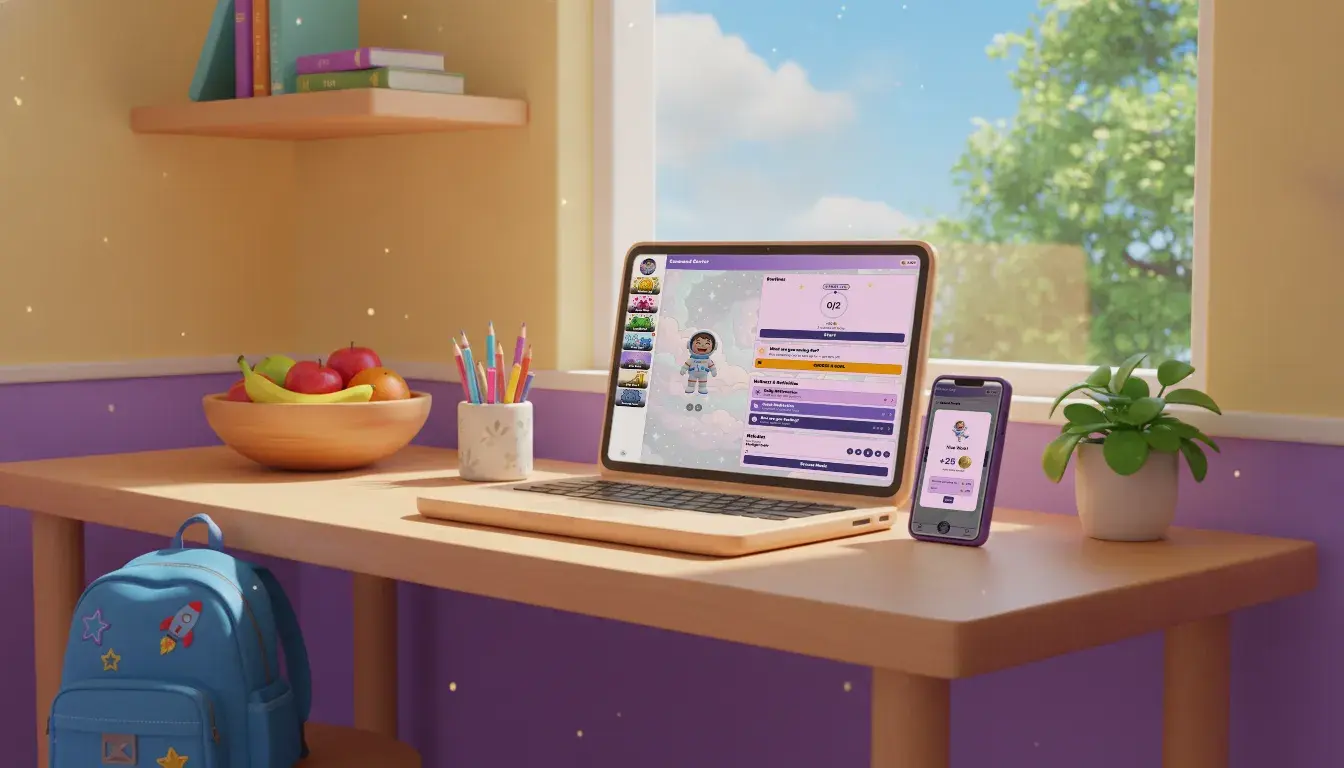
Fund an at-home program families run themselves. A school can fund a home-routines program for every family — parents enroll themselves on their own phones, run it at home on their own schedule, and nothing is scheduled, staffed, or attended. It's the same logic as the take-home kit, carried by an app instead of a bag, and it pairs naturally with the communication tools a school already uses (here's how a home system co-exists with classroom apps without adding teacher work).
-
Ask the families who never come. Section 1116's requirement that the plan be developed with parents is also an engagement idea in its own right. Call five families who never come and ask one question: "What would you actually use?" Then build their answers into the plan.
The eight ideas side by side
| Format | When families take part | Staff time | What the school has on file |
|---|---|---|---|
| Morning session at drop-off | Before work | One session | Sign-in sheet |
| Recorded workshop | Any time | Record once | View counts |
| Text-first messages | Any time | Minutes per message | Delivery and reply counts |
| Home visits | Scheduled with the family | High: educators visit in pairs in the PTHV model | Visit log |
| Tables where families gather | Where families already are | One staffed table | Contact count |
| Take-home kits | At home | Materials and assembly | Kits sent home |
| At-home program families run | At home, any time | Little after launch | Count of families who started |
| Calls to families who never come | Any time | Five calls | Call notes |
What About Families Without Devices or Reliable Internet?
Every digital format on this list misses a family with no device or no reliable connection, and a Title I school will have some of those families. Anything digital should be paired with a non-digital route to the same content — a printed version, a phone call, a visit. And any school funding a digital program should expect a straight answer to "what share of our families did this actually reach?" — including when that number is disappointing. Reaching families an evening event never reached is progress; it is still not everyone.
How Do You Increase Title I Parent Participation Without Adding Staff Hours?
Pick formats where staff do the work once and families take part on their own time. One evening event means planning, promotion, staffing, translation, child care and custodial time. A recorded workshop or a take-home kit is made once and sent once. Families use it at home, with no one from the school in the room.
The other half is what participation looks like on paper. A sign-in sheet counts chairs; a recorded session has view counts; a text campaign has reply rates; a take-home program can report how many families started and stuck with it. Participation that happens at 8pm in a kitchen is still participation — and whether and how it belongs in your school's documentation is your coordinator's call.
What Does the School Have on File at the End?
For events, the answer is familiar: agendas, translated invitations, sign-in sheets.
For an at-home program, the answer is a count record. What a vendor can give a school is how many families started, and when (signed up, set up a routine, kept going), with the definitions held the same from month to month. What a vendor can't give a school is a compliance conclusion: a count record is not an audit document, and it doesn't certify that any requirement has been met. What belongs in your school's family-engagement documentation is your coordinator's call, not the vendor's — a vendor who tells you otherwise is describing your obligations, and that was never their job.
Where KudoKids Sits in This
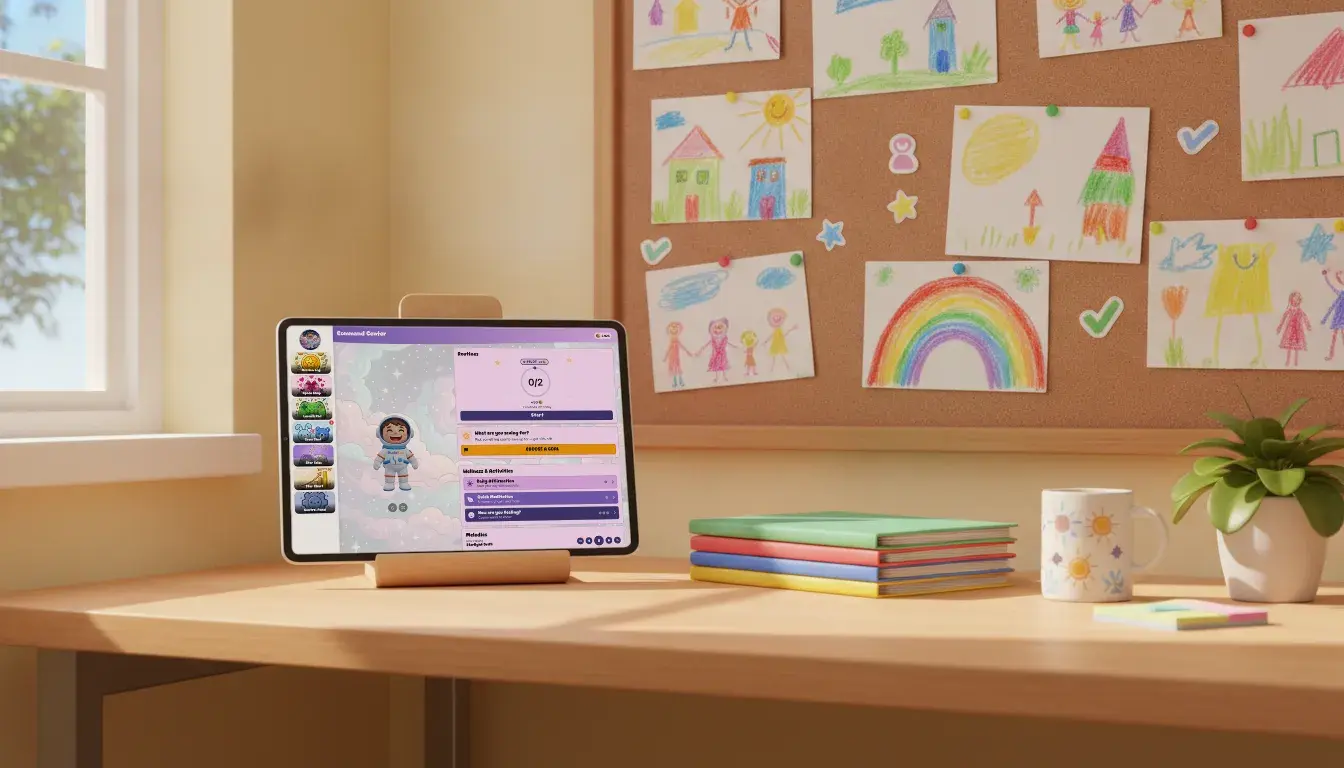
KudoKids (kudokids.org) is idea #7: a home-routines app for kids 3–12 that a school can fund for every family in the building. Parents enroll directly on their own phones, kids earn screen time by finishing real routines, and teachers run nothing. The core app stays free to families either way. The funding section of the schools page explains how a school can pay for it and hands the allowable-use question back to the people it belongs to.
Frequently Asked Questions
Is low turnout at parent nights a sign that families don't care?
Not on its own. The law itself treats getting there as a cost: Section 1116 lets Title I money pay transportation and child care costs "to enable parents to participate" in school meetings and training, and it names home visits too. Federal survey data also show a gap, with 66% of students below the poverty line having a parent or household member at a school or class event in 2018–19, against 82% at or above it.
Are virtual parent nights enough to reach working families?
They remove the travel barrier but keep the clock barrier: a live 6pm video call still asks a closing-shift parent to be free at 6pm. Pair anything live with a recording and a short async version, and measure who each format actually reached.
How is participation in an at-home program documented?
As counts: how many families started, and when. A credible vendor delivers the number with its definitions and its limits stated — and leaves the decision about what belongs in the school's family-engagement file to the school's coordinator.
What does Section 1116 actually require a school to do with families?
In brief: a written parent and family engagement policy developed with parents, a school-parent compact, an annual Title I meeting plus a flexible number of meetings beyond it, capacity-building for both staff and families, and communication in a format families can actually use. The statute names flexible meeting times, transportation, child care, and home visits as supports funds can provide. How a school meets those obligations is designed in its own plan.
No ads* · No child data sold · Ages 3–12
*ads can be shown via the YouTube and web browser features if a parent turns them on.
Last updated: September 24, 2026
This article is for informational purposes only and does not constitute legal or funding advice. Every determination about a school's family engagement plan and its documentation belongs to the school, its coordinator, and its business office.