KudoKids is a children's digital wellbeing app for ages 3–12. We're asking pediatricians for an honest read before we hand it to the families in your practice.
The screen-time conversation is the one parents almost always bring up — and the one pediatricians have the least time to answer well. "Try a chart" is not an implementation. A referral is six weeks away. Between visits, there's nothing to hand them.
We'd rather hear "here's what I'd do differently" than "looks great." That's why you're getting this brief before parents do. — Why we wrote this for pediatricians
Higgsfield still life — coming
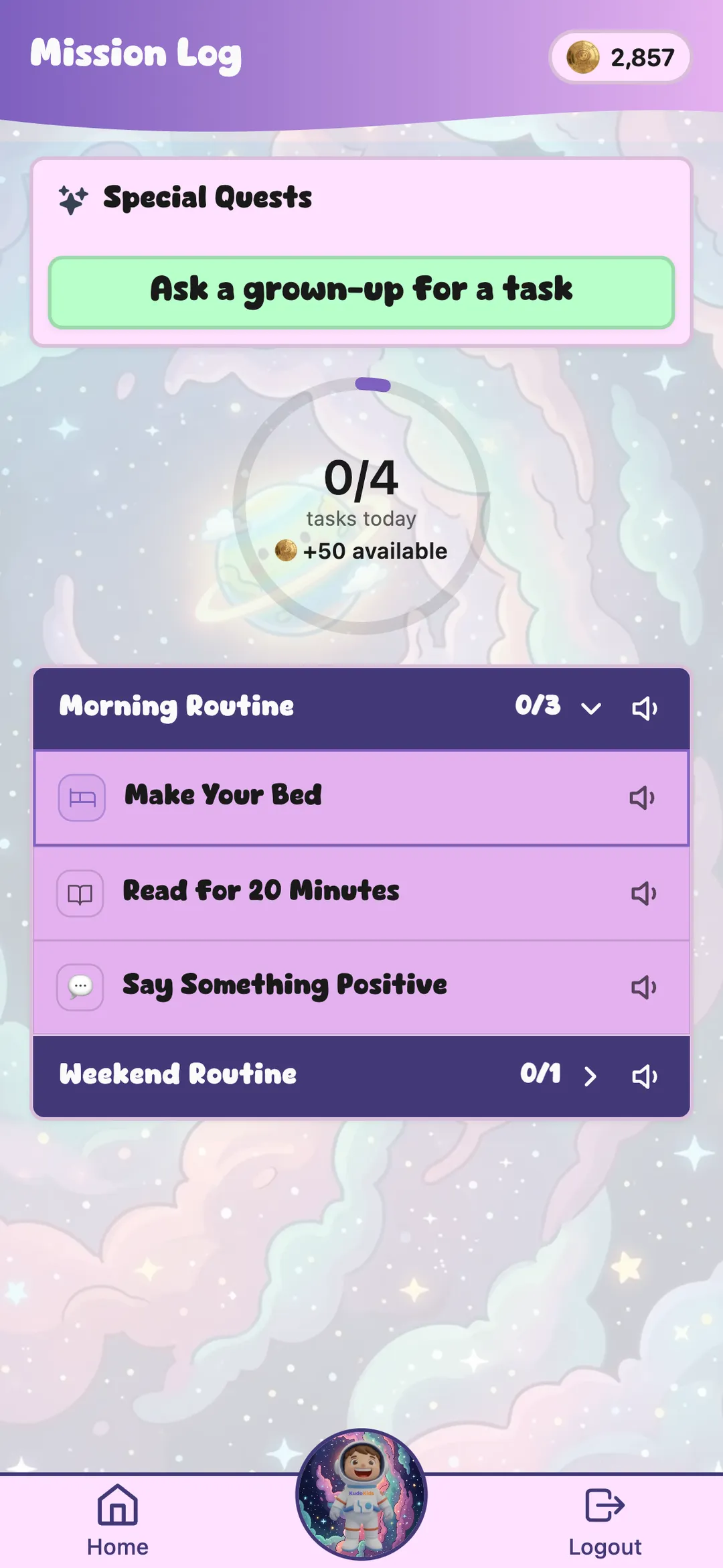
Kids earn Kudo Coins for completing routines and tasks their parent set up. They spend those coins on screen time, in-app stories, companion customization, games, or real-world rewards. Every interaction touches a developmental domain — responsibility, financial thinking, emotional wellness, learning, or social skill.
Parent-set steps · Coin values per step
Companion-spoken affirmations · 5-min meditations
Tap a feeling · companion validates · offers choice
Premium ($5.99/mo) unlocks 19 additional companions and customization. Everything else — routines, mood check-ins, affirmations, meditation, 60+ music tracks, sleep sounds, stories, family messaging — is in the free tier.
When a child taps a hard feeling, the companion is not the intervention. The companion is the bridge that helps a kid find the words to tell a grown-up — the same loop you'd hope a chart at home would create, except it actually gets used.
Companion validates
"Some days are harder than others." Kid earns Kudo Coins for naming the feeling.
Whether the language at each step lands the way we think it does — particularly for kids you'd screen positive on a behavioral or developmental tool. This is the slide pediatricians push back on first; we'd rather you push back here.
Three places where we made specific calls — and where we'd push back on the assumption a kids' app naturally drifts toward.
Companions speak pre-recorded, human-vetted lines. Mood check-ins are deterministic flows, not language models. We use AI to build the product fast. We don't ship AI as the thing kids talk to — and we won't for years.
Designed to dry up.Kudo Coins are finite. Games cost coins to play. Activity windows can lock features. The win-state is a kid earning a real-world reward, putting the device down, and going outside — not staying in-app longer.
The literature is clear that extrinsic rewards can crowd out intrinsic motivation for activities a kid already loves. So we use them for the opposite — things kids resist (transitions, brushing teeth, naming hard feelings). The Coin economy fades as routines become mastered.
These are the slides pediatricians usually push back on first. We'd rather have the pushback land here than three months into a launch we have to walk back.
The UI changes shape based on the child's age. Parents can override the group if a child is ahead, behind, or just different.
| Preschooler · 3–5 | Child · 6–8 | Preteen · 9–12 | |
|---|---|---|---|
| iTouch targets | 80px | 60px | 48px |
| iiReading mode | Aa Icons-only · voice narration on | Aa Mixed icons + text | Aa Text-heavy |
| iiiSaving incentive | "Save 2 days → +10 Coins" | "Save a few days → bonus" | "Save a week → +50%" |
| ivScore display | Stars | Numbers | Full analytics |
| vCompanion size |
![]() |
![]() |
![]() |
The 3–5 mode is the most opinionated. Non-readers navigate by companion image, not by text — which is why the companion is the biggest tap target on the screen.
Every mechanic is editable per child. We ship sensible defaults so parents aren't overwhelmed — the depth is there when a child needs something different.
Gentle by default. The demerit system is opt-in specifically because penalty mechanics can backfire in untrained hands. Visual schedules, repeated sub-step checklists, companion-led check-ins, and per-child pacing are built for families where standard routines don't land.

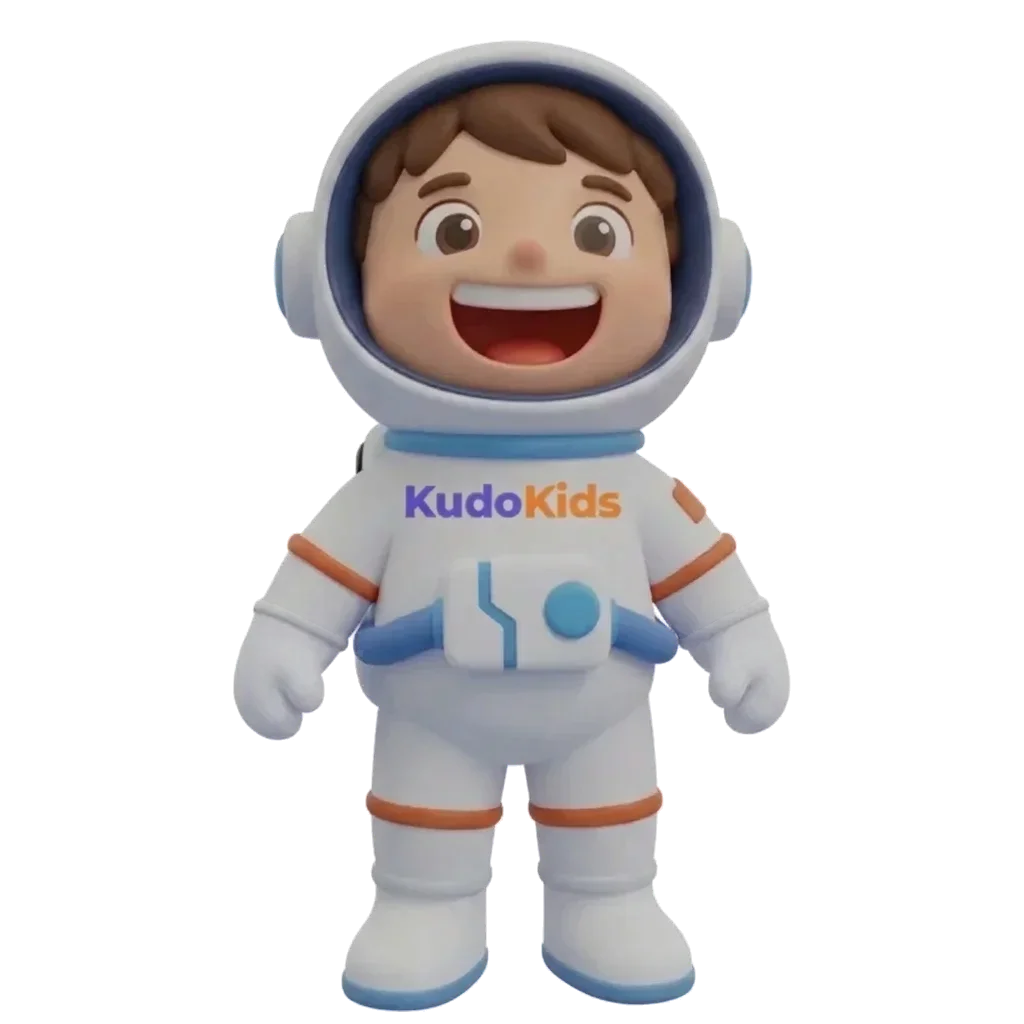
Every child starts with Cosmo. The other 19 unlock with Kudo Coins once a parent has subscribed to Premium.
Each companion has its own voice across the app — routines, affirmations, meditation, story narration, mood check-ins — roughly 1,000 lines of dialogue per companion.
Augmented reality lets kids place the companion into the room, walk around it, and take photos. AR processing stays on-device; no camera frames are transmitted.
Space · Ocean · Jungle · Candy · Dino · Princess · Arctic
Pediatricians keep telling us the same thing about the digital wellness category: it tends to price out the families that need it most.
The wellness loop — affirmations, meditation, mood check-ins, bridge-to-parent — is in the free tier on purpose. A family that can't afford a $5.99/month subscription should not lose access to the part of the product where the wellbeing tools actually live.
19 additional companions · skin / animation / aura unlocks · companion customization. Parent-gated at signup; children never see pricing.
A meaningful share of the patients in your panel split time between two homes. The child's profile, companion, Kudo Coin balance, and progress travel with them. Each home defines its own routines. The two parents do not have to see each other's home — they grant that visibility, or not.
Companion · Coin balance · unlocks · mood-check-in history · wellness preferences · earned focus areas.
Routines (each parent defines their own) · approval workflow · optional rewards · calendar.
Parents do not see each other's home by default. Visibility is granted explicitly, both ways, so calendars and routines stay private.
A co-parent who refuses to use the app. A co-parent in active conflict with the other. We can't solve that, and no app can. But the daily routine — the thing most shared-custody kids reset on for 2–3 days at each transition — doesn't have to be the thing the two of them fight over.
| Service | What it sees |
|---|---|
| Supabase | All family data, encrypted at rest |
| Stripe | Parent email + payment only |
| Apple / Google AR | On-device camera only — never transmitted |
| Voice / TTS | Generated locally on build machines; bundled with the app |


Try the app. Tell us where the wellness language doesn't match how you talk to families. Everything else is downstream of that.
We set it up this week. You log in when you have 30 minutes. You tell us where the language is off, what's missing, what to delete. Direct line to the founder. No commitment beyond honest feedback.
Apply at kudokids.org/partners/pediatricWhat could come next, if you want it — not a request, just transparency about the path:
| Level | What you do | What you get |
|---|---|---|
| 2 · Hand-off at well-visits | Purchase discounted 1-year Premium packs (5, 10, or 25) to hand families at the appointment, so they can start the same day. Multi-option framing required — KudoKids is one tool you mention, not a prescription. | Discounted Premium license packs · families start same-day · LOU on file. |
| 3 · Listed & supported | Listed in our public pediatric provider directory; mention KudoKids in practice materials with the required FTC disclosure. No quotas, no referral income — ever. | Public directory listing · practice-visibility from referrals back · direct line to the team. |
Many pediatricians can't put a badge on a public website — group-practice contracts, hospital affiliations, state-board rules on endorsements. The LOU has a feedback-only track that requires nothing public.
We'd rather have your real critique than a polished quote — most of what we've fixed in the wellness flow came from clinicians telling us what was wrong. — What we ask of you
The LOU comes back signed digitally before any public use of your name; until then nothing public happens. You remain responsible for compliance with your state licensing board's rules on endorsements.
Free, permanent, no card required. Email goes out within 48 hours of this meeting.
Apply nowWe screen-share, you tap around, we listen for everything you'd change. Bring whatever patient-population context is relevant.
Premium packs at well-visits? Directory listing? Nothing? All three are fine. We'd rather you say no than yes for the wrong reason.
The one thing we need from this meeting: a yes to Step 1. Everything else follows.
We're at the beginning of something we genuinely believe will help families — and we'd rather build it slowly with the right professional input than launch fast and hope.
Joseph Yelle — founder
Working with over a dozen child and family therapists.